
Client: Waste Applications Inc.
Timeline: Feb. – Dec. 2022
Role: Lead Product Designer – UX research, interaction design, prototyping, validation
Team: Product Owner, Dispatch Managers, Engineering Team
Tools: Figma, workflow mapping, clickable prototypes, design system libraries
Project Summary
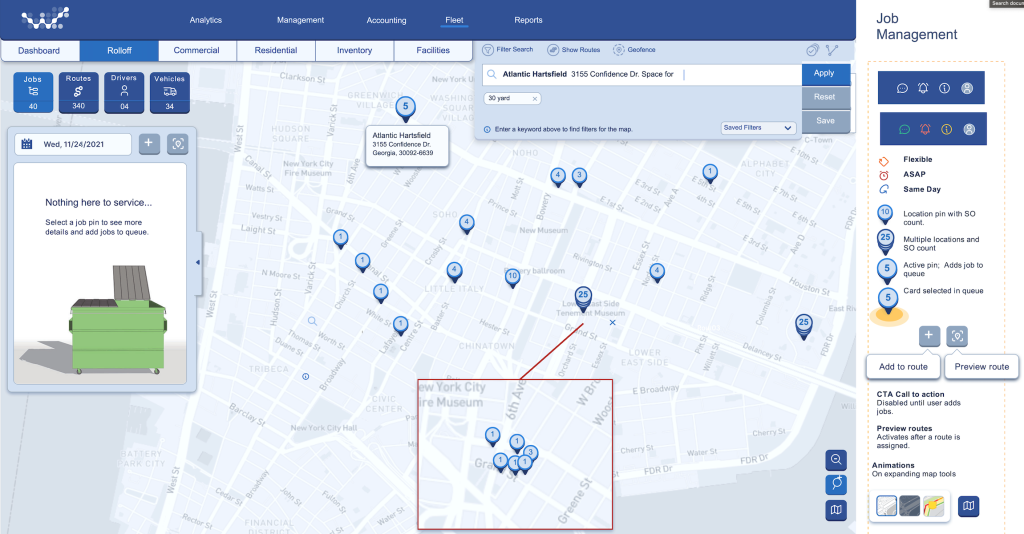
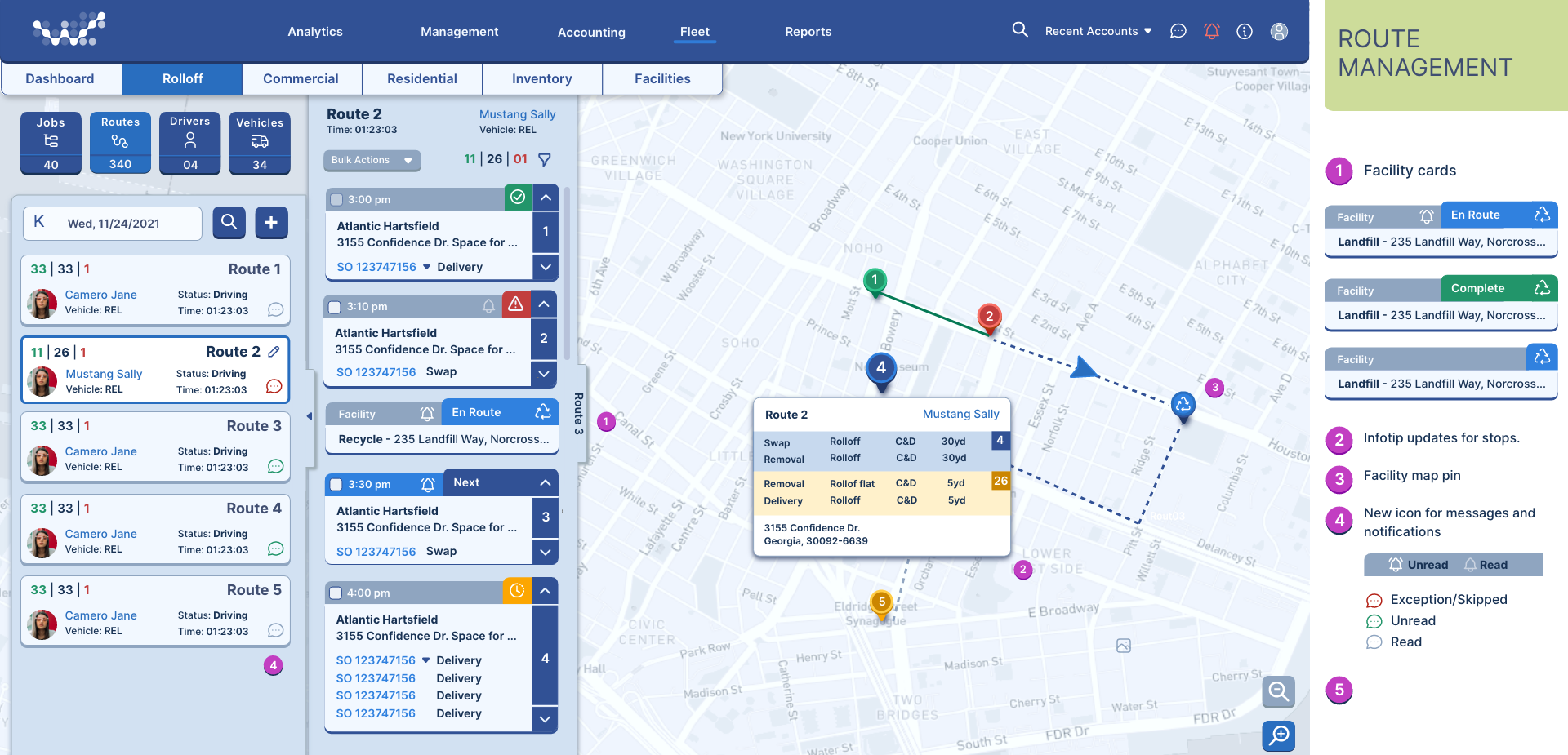
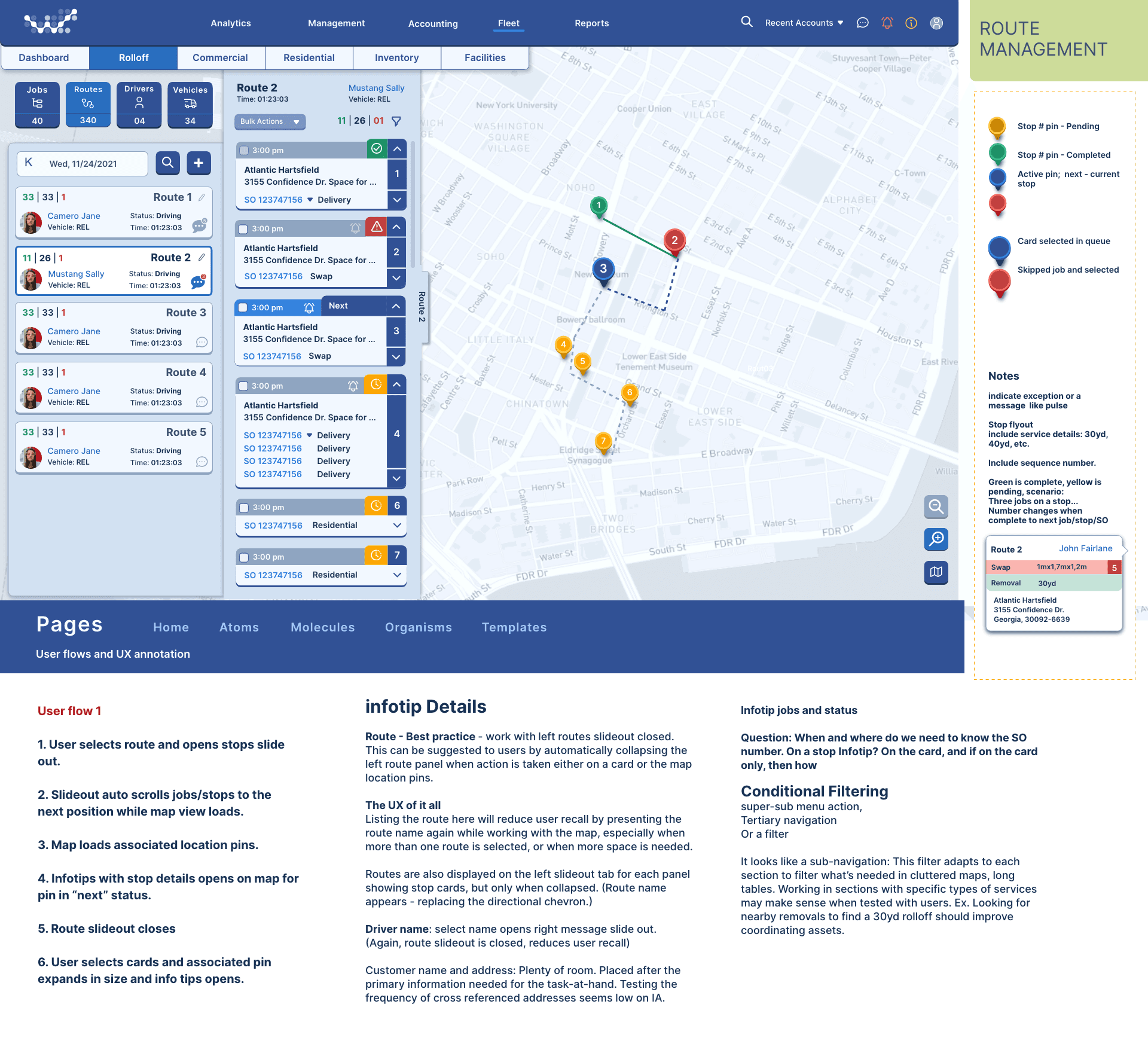
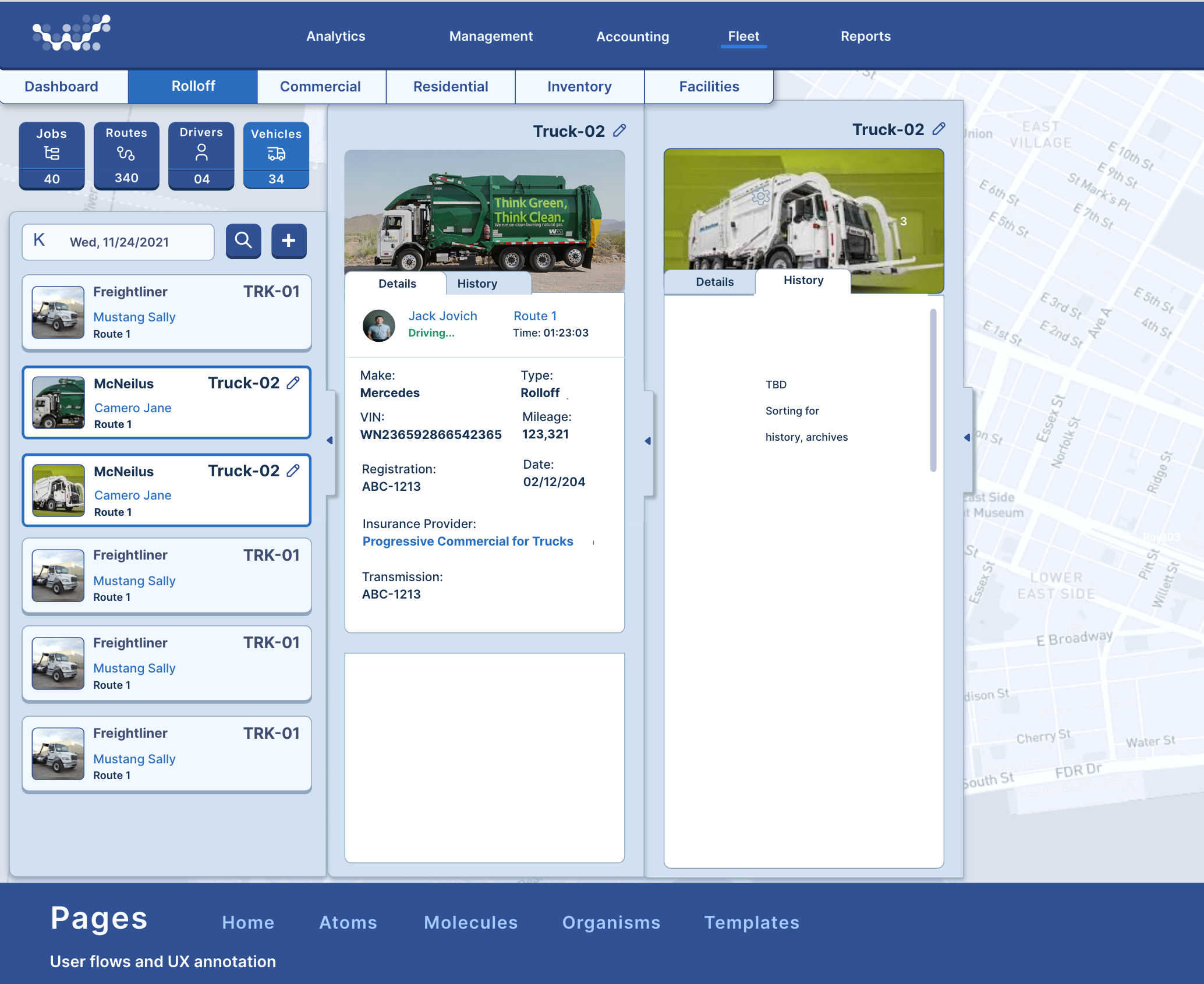
| The project involved designing an innovative mapping and routing solution tailored for the waste management industry, specifically targeting commercial and residential waste services. The goal was to create a mobile-first, touch-friendly interface that uses rich colors and high contrast to clearly communicate important information quickly and effectively. This meant the design had to support complex workflows involving multiple user roles and objectives. Overall, the project required extensive coordination between different system components and user needs to deliver a comprehensive, easy-to-use platform for waste management businesses. Dispatch Coordination Time: Reduced by 60% (25 min to 10 min per route) Route Accuracy: Improved by 40%, cutting down on missed or delayed pickups Asset Utilization: Increased by 30%, ensuring trucks and containers were actively in use Training Efficiency: New dispatcher onboarding time cut from 3 weeks to 1 week Operational Savings: Estimated $250K annual savings per regional hub | Solution The solution was intended for B2B customers, waste management and recycling companies, that require tools for dispatching and routing their fleets, as well as monitoring assets, revenue, vehicle usage, and account productivity. To be sold to waste management/recycling businesses looking for dispatch and routing, as well as, oversight into asset, revenue, vehicle and account productivity. We had to coordinate multiple interactions and objectives of the user to find easy solutions for complex flows, which included a driver app and order tracking. I linked subscriptions to service design for this omni-channel enterprise solution. This requires coordinating service deliveries to work sites through a mobile driver app linked to dispatch. |
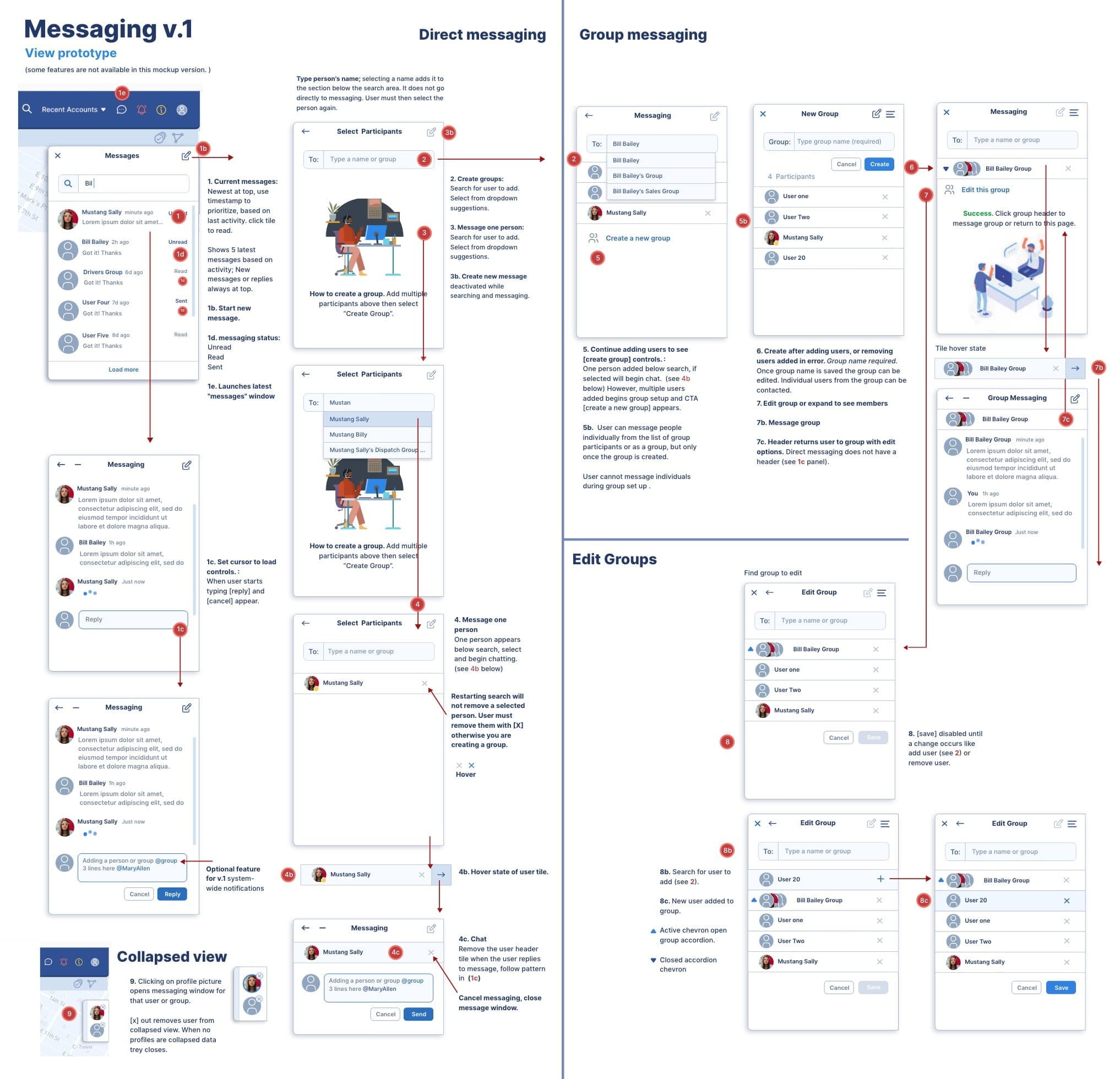
Key components of the scope included:
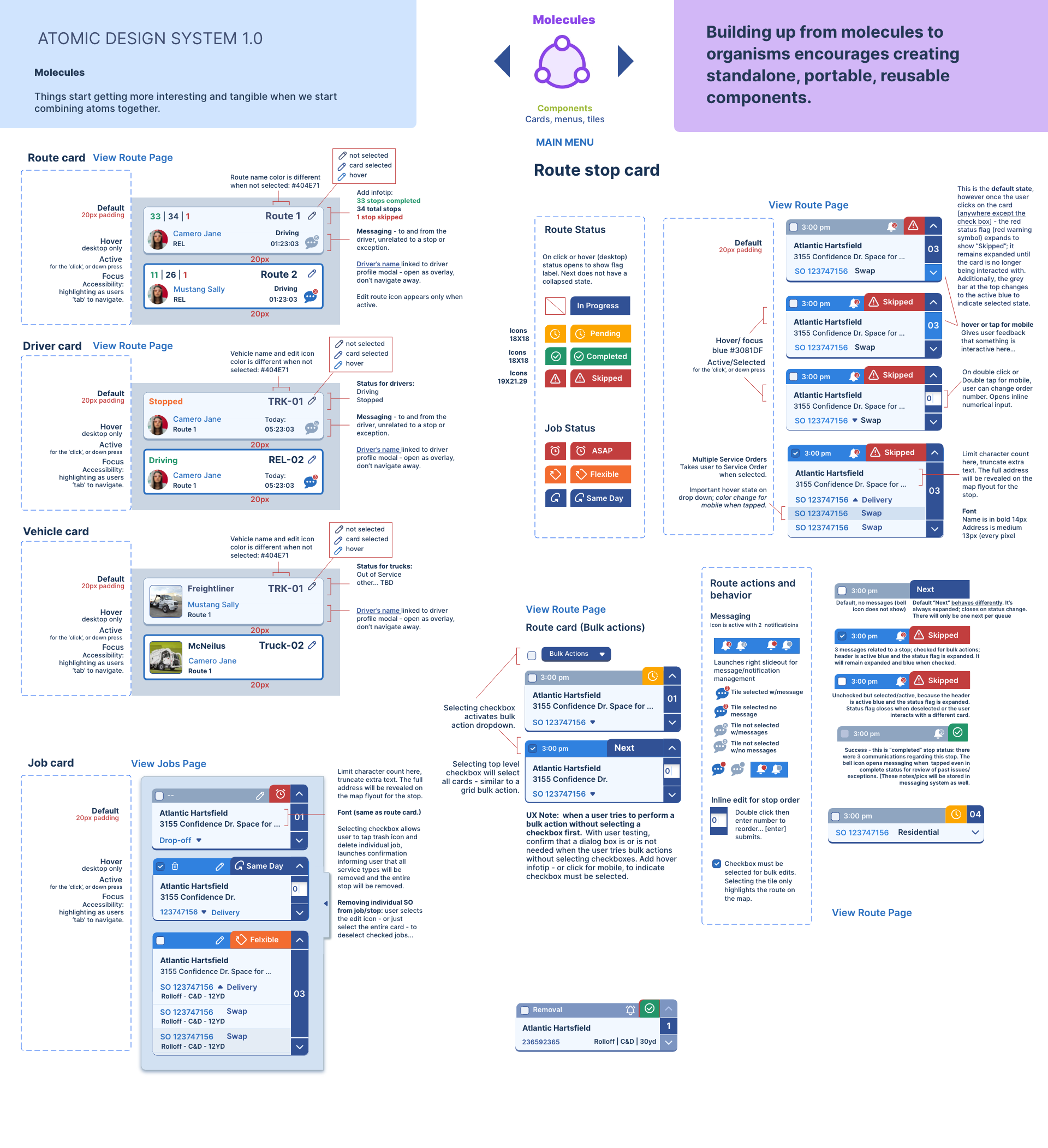
| Designing a consistent and cohesive UI styling aligned with ABS branding, including shared component and pattern libraries and support for dark mode. Developing an omni-channel enterprise solution that integrates a mobile driver app with dispatch operations, enabling real-time coordination of service deliveries to various work sites. | Creating user flows and interactions that simplify complex tasks such as order tracking, route planning, and productivity oversight. Linking subscription management to the overall service design, ensuring seamless user experiences across different touchpoints. |
Research
| My holistic research approach, based on Lean UX methodologies, enabled the creation of a flexible, accessible, and user-friendly interface that supports complex routing, tracking, and productivity oversight tasks effortlessly. Stakeholder Interviews: Early discussions with the CTO and key stakeholders at Waste Applications Inc. helped me align on business goals, product vision, key features, and branding requirements, ensuring the UI met both user and business needs. User Interviews and Contextual Inquiry: We interviewed a variety of end-users such as dispatchers, asset managers, vehicle operators, and revenue analysts. Observing their workflows and challenges firsthand allowed deeper understanding of pain points and real-world usage scenarios.
| Competitive Analysis: An in-depth review of existing mapping and routing SaaS platforms highlighted common industry features, usability standards, and areas for innovation, guiding design decisions to differentiate the product from other similar applications. Wireframing and Low-fidelity Prototyping: Multiple rough sketches and wireframes were created to experiment with layouts and information hierarchy. Early prototypes were shared with stakeholders and select users for iterative feedback.
|
 Outcomes & Business Impact
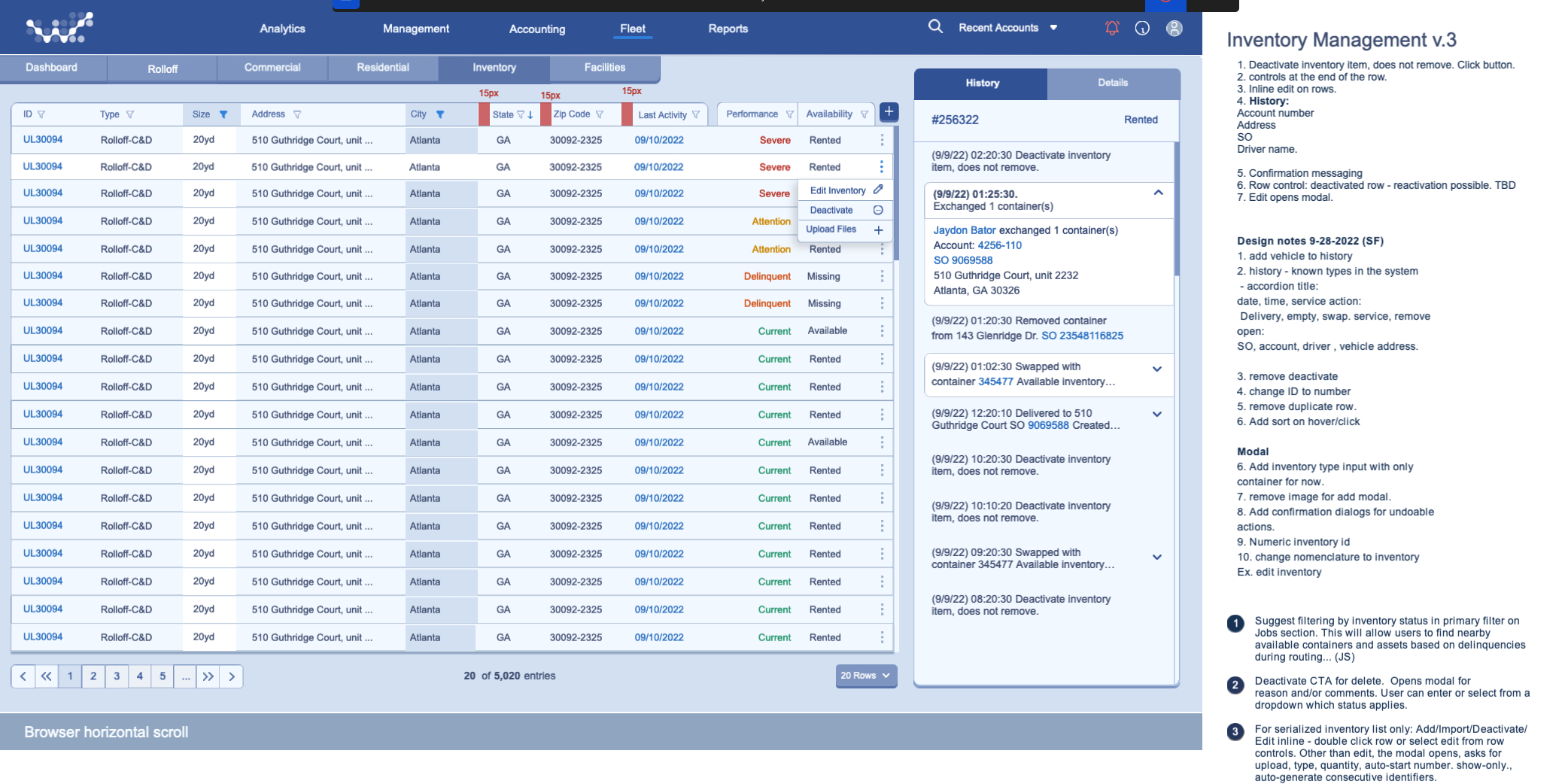
Dispatch Efficiency: Average route planning time dropped from 25 minutes to 10 minutes (≈60% faster), enabling dispatchers to handle more routes per shift. Task Accuracy: Improved workflows and real-time validation reduced route assignment errors by 45%, cutting costly misroutes and rework. Adoption & Training: Simplified UI and design-system patterns reduced new dispatcher onboarding from 3 weeks to 1 week, accelerating adoption. | Asset Utilization: Live asset tracking improved truck/container usage by 30%, reducing downtime and idle equipment. Operational Savings: Workflow efficiencies generated an estimated $200K in annual savings per regional hub, directly supporting SaaS ROI. Customer Satisfaction: Improved service reliability increased on-time pickups by 20%, boosting client satisfaction and retention. |
Next Steps (Strategic Reflection)
Pilot AI-driven route recommendations to further reduce planning time by 20%.
Expand mobile driver UI with offline-first support for low-connectivity areas.
Explore predictive maintenance alerts for truck and container assets to boost uptime.
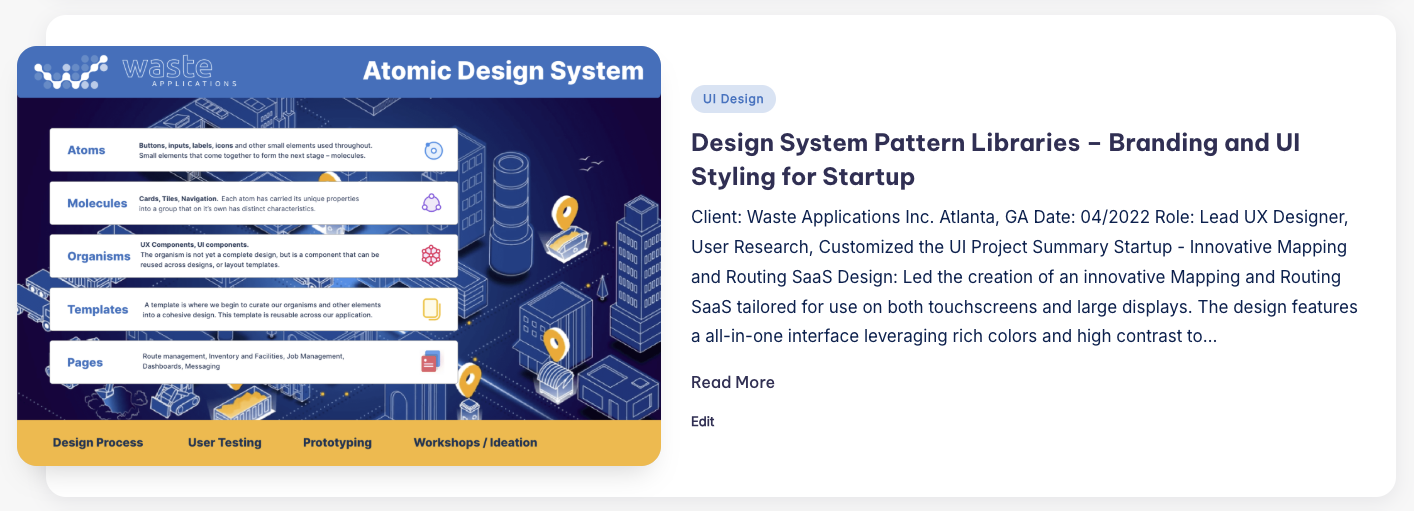
Extensive design system