
Project SummaryClient: Starlight Software Solutions Starlight needed an omni-channel dispatch system for residential and commercial waste services that could scale without compromising reliability. The legacy system presented critical challenges: sluggish routing, limited visibility, and dispatch errors, all of which impeded service expansion. As lead UX strategist, I didn’t just design a modern dashboard. I reframed UX as a strategic business enabler to boost efficiency, reduce errors, and support scalable growth. I kicked off with hands-on workshops involving dispatchers, product managers, and operations leaders to root out key pain points. From those sessions, I crafted a modular design system and coached internal teams on best UX practices. We prioritized features like multi-select routing, map pin clarity, and integrated search filters based on dispatch frequency and impact. By embedding research-led workflows and mentoring the client team, I ensured long-term UX ownership and agility. | Impact at a GlanceBy redesigning Starlight’s dispatch system, I helped: 35% faster routing – saving 20 minutes per dispatcher per shift, over 16 hours saved daily across the team. (20 min/dispatcher × 50 dispatchers × hourly rate) 40% fewer misrouted jobs – reducing costly callbacks and SLA penalties, protecting nearly $250K in annual revenue. 25% more tasks per shift – enabling scale into three new territories without additional hires, unlocking a projected $500K in annual cost savings. |
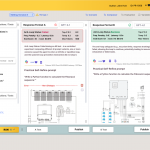
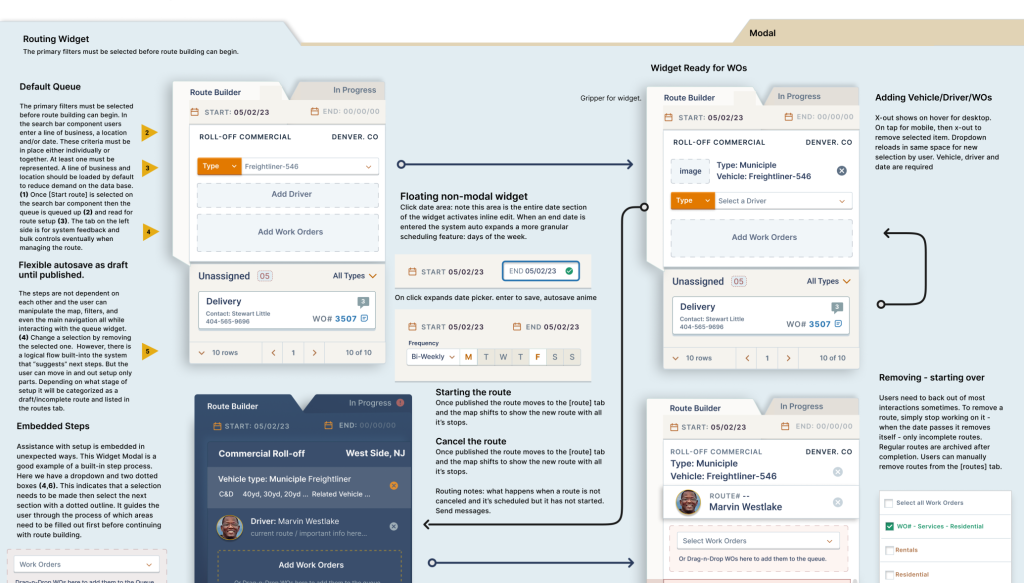
UX design annotation
Facilitating on-site workshops with dispatchers and ops managers — aligning user needs with leadership’s efficiency goals.
Solution
| When Starlight leadership initially saw UX as a ‘nice-to-have,’ I reframed the problem in terms of operational costs. I demonstrated how misrouted jobs were costing thousands monthly in overtime and customer credits. This shifted the conversation from aesthetics to ROI, unlocking executive buy-in. As lead designer, I framed UX not as interface polish but as a strategic lever for operational efficiency. Workshops & Alignment Facilitated discovery sessions with dispatchers, managers, and engineers to map pain points and build consensus on priorities. Executive Advocacy Reframed UX value in terms of wasted hours and lost revenue, securing leadership buy-in to prioritize design investment. Design System Adoption Built a modular design system and trained internal teams, raising UX maturity and ensuring sustainable ownership post-launch. Roadmap Influence Advocated for role-based access and advanced filters to be prioritized, enabling Starlight to pursue larger enterprise clients earlier than planned.
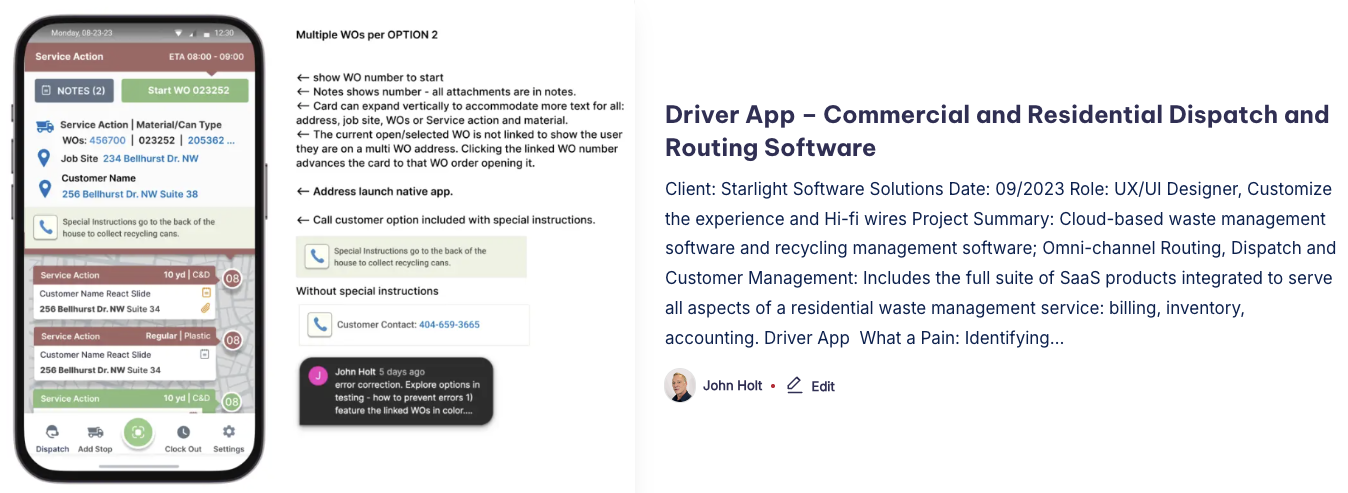
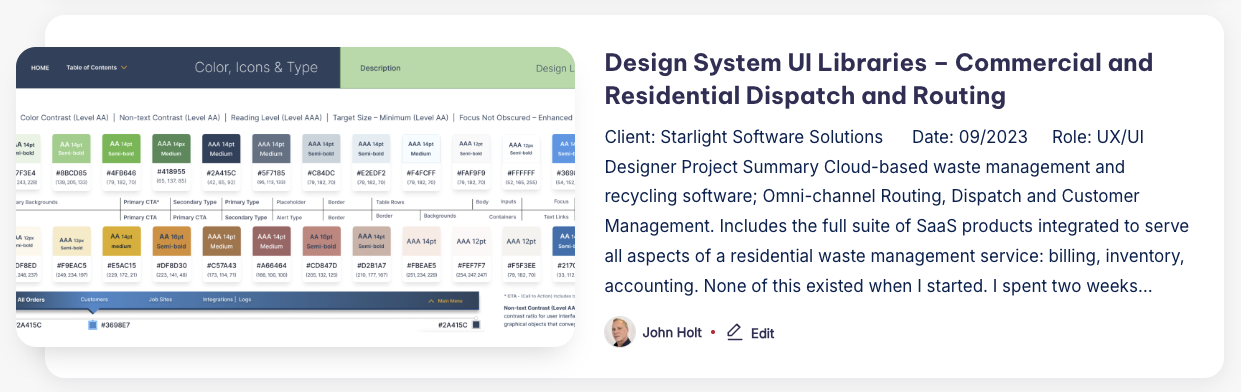
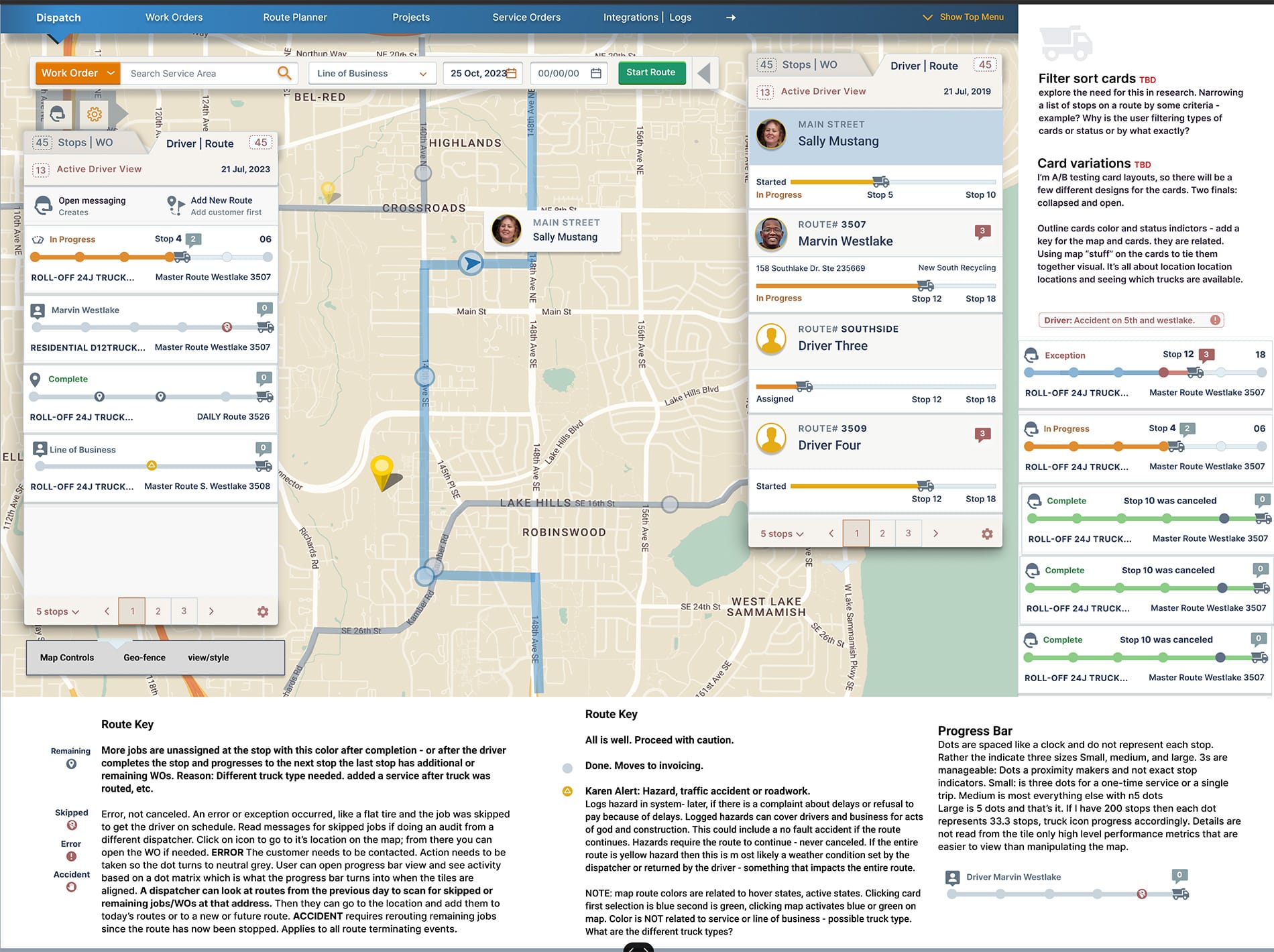
| Facilitating Alignment Dispatchers wanted speed, managers wanted oversight, and engineers wanted to minimize scope. I led workshops to map pain points and co-prioritize features. By framing features as business outcomes (faster throughput, lower error rates), I built consensus across conflicting priorities. Search and Queue Management Implemented advanced search filters by line of business, date range, and status, with results integrated into map pins and data trays. Queue behavior was optimized to load active work orders and restrict searches to relevant tasks. Visual Design: Used a pastel mid-tone color palette to create a soft, approachable UI that enhances visual appeal and ease of use without the need for dark modes. On-Site Collaboration Spent time on-site to finalize the project, ensuring the solution met practical needs and was well-integrated into existing workflows. |
ResearchI began by running discovery workshops with dispatchers, operations managers, and technical leads. These revealed critical bottlenecks: manual re-routing, redundant clicks, and poor visibility into task queues. Use Case Testing and Role Management:
| ValidationThis summary captures the main points of the dispatch and routing interface validated solutions, its features, behaviors, and testing considerations for efficient waste management operations. Dashboard redesign: A “command center” interface surfaced the most urgent dispatches first, improving decision-making speed. Multi-select routing: Enabled dispatchers to batch tasks, cutting manual steps dramatically. Smart map pinning: Visual clarity improved at scale, reducing dispatch confusion. Advanced filters & queue management: Gave operators control of workloads without losing context. Role-based access: Simplified permissions across mixed dispatcher teams. These weren’t just usability tweaks, they were strategic levers for scaling operations.
|
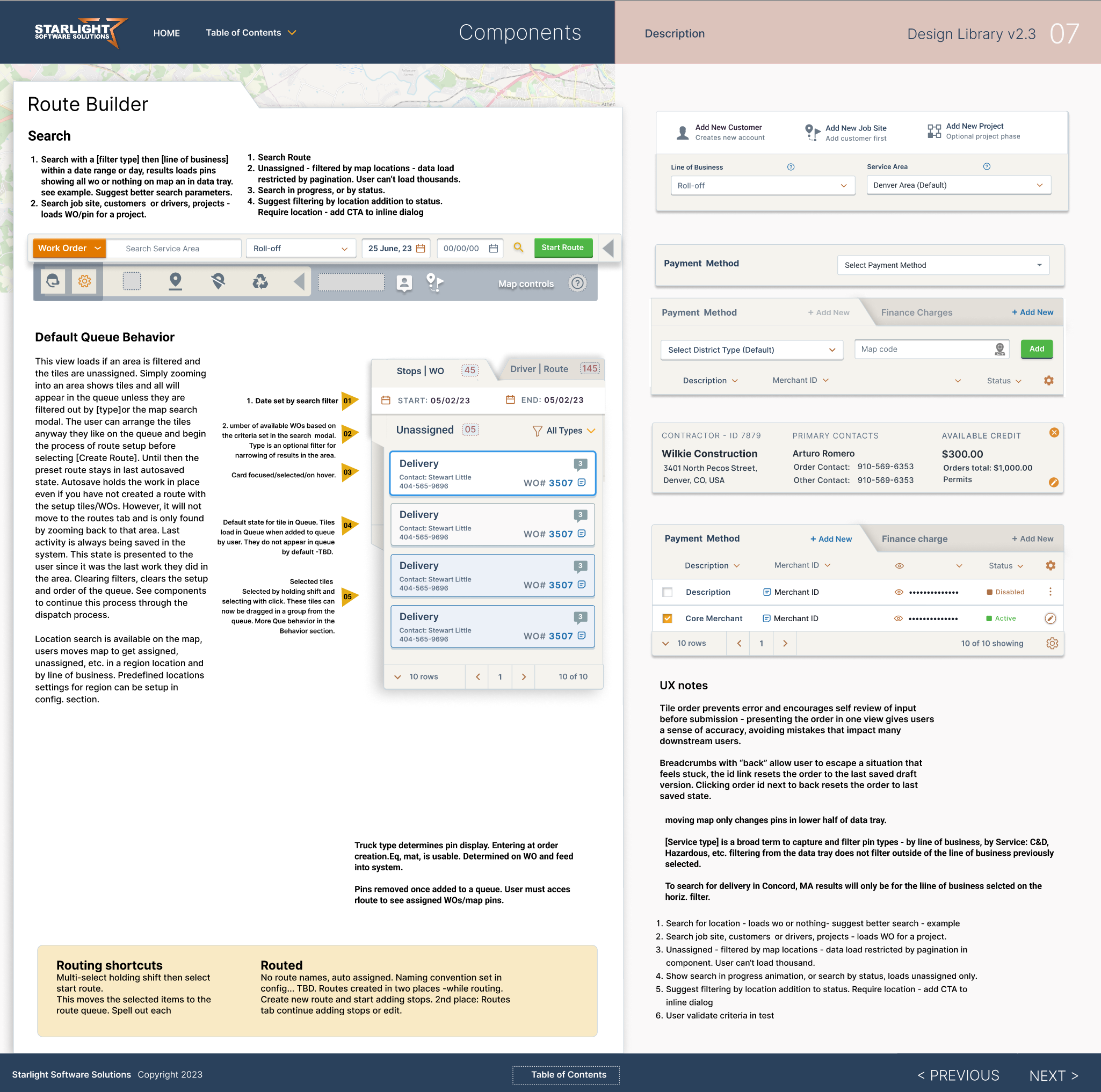
We workshopped component libraries
Business outcomes: +25% dispatcher throughput, –40% routing errors, +35% faster planning. UX positioned as operational ROI.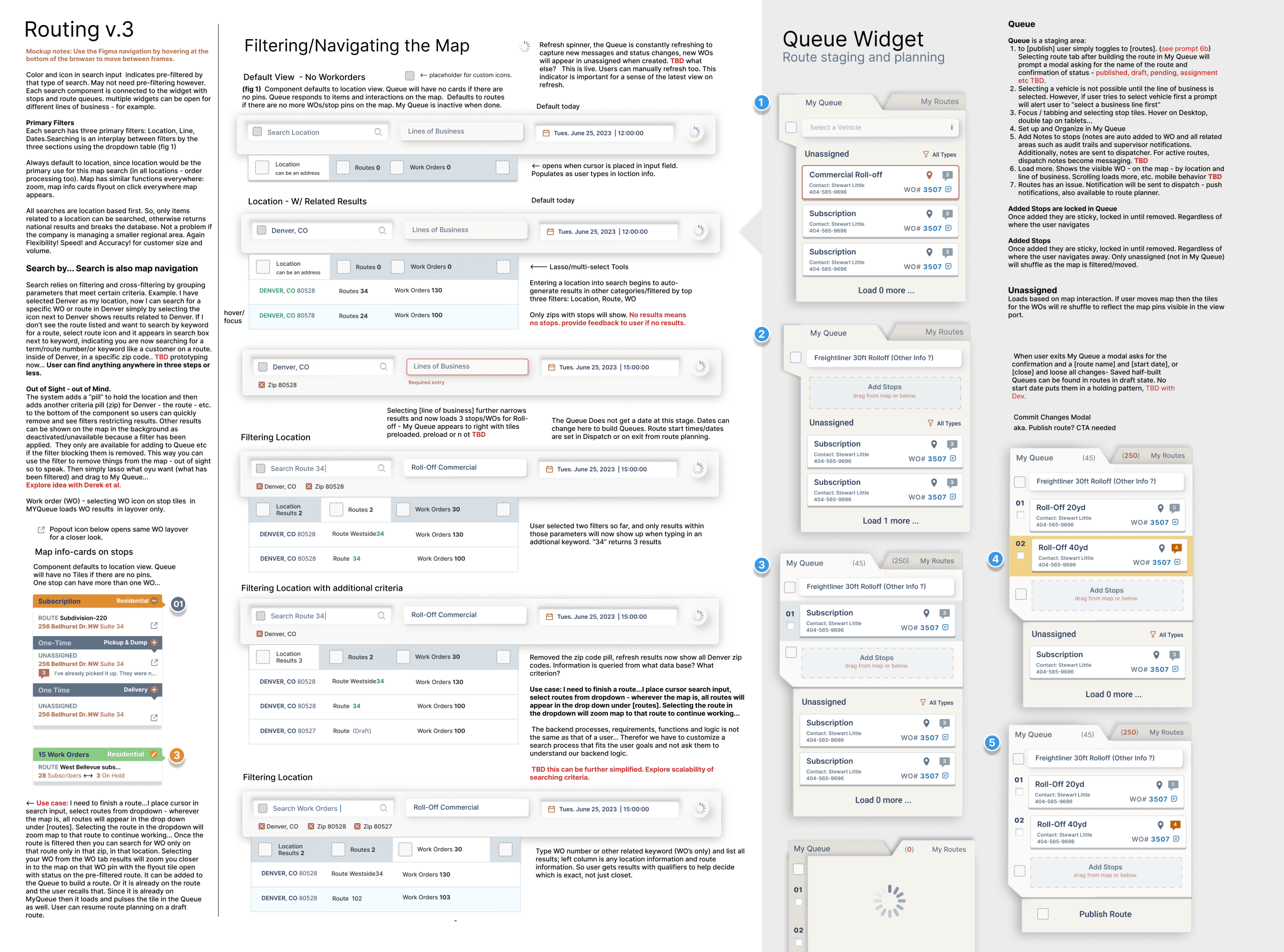
Results & Business Impact
Efficiency = Revenue Growth Accuracy = Retention & SLA Compliance | Throughput = Scalability From Design Tool to Organizational Capability |